
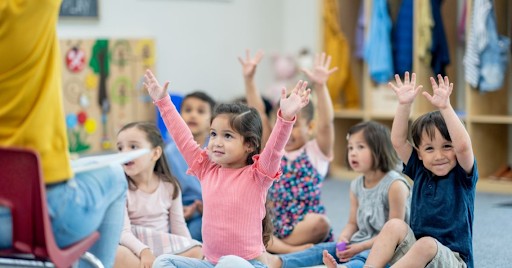
Each day children make small discoveries, build large self-assurance and curiosity, and have a long lifespan of connections. Parents looking at an early learning centre in Ipswich should give conscious thought to their child’s experiences when they are at the centre. A warm and inviting atmosphere provides opportunities for children to explore and feel safe, understood and valued. Learning starts with dirty shoes and the questions that show up; by the table we share. These everyday moments can help build vital skills – without frantic or overly illustrative activities. Our highly skilled teachers identify a child’s personality and promote growth through play, thought and gentle instruction. In turn, they provide an exciting base for developing minds, friendships and a passion for learning.
Growing Confidence
Children gain confidence over time when they find their ideas and choices valued by others. Simple tasks, e.g., selecting activities or cleaning up resources, support personal pride and independence. Supportive educators recognize effort instead of excellence and foster an attitude in children to face new experiences with a sense of courage. This “hubris” may bleed over into friendships, family life and future classrooms over time.
Making Friends
Friendships can be a useful context in which children practise skills of sharing, listening and understanding another child’s point of view. Group play teaches the soft skills of compromise, particularly when it comes to having their favourite toy. Children express their feelings effectively, they settle conflicts respectfully and they recognise feelings in their companions, all supported by the educator. These experiences deepen the sense of empathy and demonstrate that differences don’t have to detract from connection.
Learning Through Play
Through play, young children are free to explore concepts that may not be expressed formally. Towers help children to problem-solve, and “shopping” helps children to play with language, imagination and interactive language. Discovery and everyday enjoyment can go together in an early learning centre where activities are thoughtfully planned, as was the case in Ipswich. Children try out a number of things, draw attention to surprising outcomes, and persevere when things go wrong. Enjoyment drives the experience; learning does not seem like one more chore.
Finding Their Voice
Language develops from stories, through songs, in the form of questions, and in the delights of spontaneous conversation between child and adult in shared environments. Attentive teachers will seek out other viewpoints and will provide time for less talkative children to think, without before-the-fact pressure. Storytelling is one way that builds vocabulary and also one way that helps children to understand sequences, emotions and motives of actions. Children are learning to articulate needs, talk with ideas and ask well-informed questions with regular prompting.
Exploring Nature
Outdoors experiences encourage movement, exploring the senses and that type of curiosity that doesn’t stay home. Children see how shadows move, are intrigued by insects they don’t normally see, see changing weather patterns, and discover new questions in familiar locations. Confidence in the capabilities of growing bodies is enhanced as they build coordination through digging, balancing and running. These finds can foster a lifelong love for natural environments and the great outdoors.
Building Routines
Children can expect ‘routines’, which enable them to guess what happens next, but then experience a surprise – and the fun of finding it out. A familiar routine around the learning day is established through shared meals and peaceful transitions, as well as familiar greetings. In this kind of environment, children have a chance to learn about maintaining belongings, to comply with directions, and to identify their duties. This balance allows for smoother transitions when children meet new teachers later, etc., as well as when the classroom has new expectations and/or rules later on.
Creative Expression
Creative activities provide opportunities for children to express their feelings and ideas other than by using their voice. Painting, music and imaginative movement offer the opportunity to play with it, there are no right or wrong results, and it’s about having a bit of fun! Unusual suggestions are encouraged to be explored, and children develop an appreciation of creative approaches in an encouraging environment. Collaboration with other people on artwork or performances also helps build collaboration, patience, and respect of contribution. Most importantly, creative freedom teaches kids that the imagination deserves space, attention and a celebration of fun.
Conclusion
It is more than a list of daily planned activities that make up a nurturing early childhood environment. It offers relationships, experiences and nurturing caresses which nourish growth in numerous linked areas. The decision to select an early learning centre in Ipswich can lead to discovery, belonging and gaining independence. Children learn to contribute by playing and befriending, feeling safe themselves. Confidence, communication and a sense of curiosity are further promoted through thoughtful routines and creative opportunities. All children develop at different times, and sensitive guidance allows scope for learning to develop naturally. For families, that combination affords them a sense of security that first experiences are significant and pleasant. Most importantly, it enables the child to come into the next chapter prepared to use that energy too – of enthusiasm, resilience and genuine wonder.